
The clip: a man sitting in a lit booth, five seconds, nothing fancy. The challenger: a woman built from four photographs. The task is the one everyone actually wants from these models — keep the shot, change the person.
The four contenders
They share a button in our editor and almost nothing else. Three unrelated techniques went into this fight, and the technique decides what survives the round.
Round 1: can they replace a person at all?
All four. Straight away, no retries, with the same four reference photos.
This round matters because the internet is full of posts swearing one or another of these engines cannot do it. They can. What separates them starts in the next round.
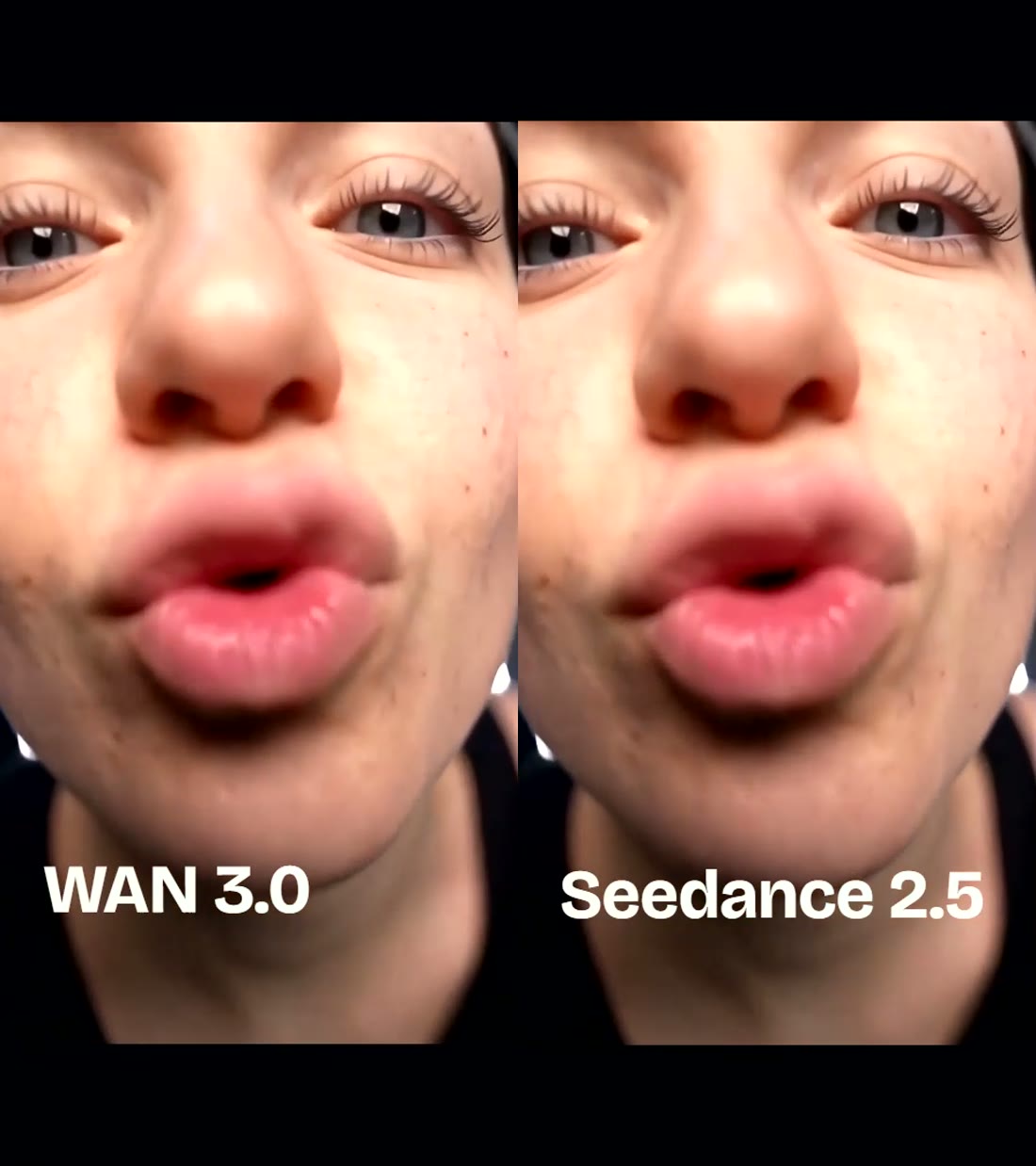
Round 2: Wan 3 vs Seedance 2.5, frame by frame
Wan 2.2 and Kling produced results you would use for a draft. The two reshooting engines produced results you would publish, and between those two the fight is close enough that the price settles it — but not before the picture does.
One clip, one character, judged by eye. Not a benchmark, and we are not going to dress it up as one — but it is the same input for all four, which is more than a demo reel will ever give you.
Round 3: who gives you back your sound
Wan 2.2 wins this round without trying: it is editing your footage, so the track rides along. Kling keeps the original sound too. The two reshooting engines cannot — what comes back is new footage, so either the model invents a soundtrack or the original has to be laid over the result afterwards, which is a second step and a second small bill.
Round 4: the bill
These are the quotes our editor shows before a run, computed from the rates on the invoice rather than from anybody's pricing page.
Two things in that chart decide budgets. The reshooting engines charge for the seconds you send in as well as the seconds you get out, so a reference twice as long as the render doubles the quote. And the bill counts pixels, not seconds — half the width and half the height is a quarter of the tokens, which is why every row has a 480p twin at roughly half price. We took that arithmetic apart in a separate piece on what a second of AI video actually costs, including why the same Seedance costs twice as much through an aggregator as it does direct.
Round 5: what gets you disqualified
Every engine refuses something, and every refusal arrives after the wait instead of before it.
The verdict: Wan 3
Best picture of the four, by a nose over Seedance on skin and likeness, at a third of the price. Wan 2.2 stays in the bag for anything where the original sound matters more than the face, and at $0.20 for five seconds it is the one to draft with. Kling earns its place when the movement is the point, because it is the only one of the four that transfers motion rather than guessing at it.
The confession
Our first two Kling runs came back with the original man still sitting in the shot. Twice. Paid for, repeatable, and we were one paragraph from publishing "Kling cannot replace a person" with the receipts attached.
It can. Our own code was looking one step up the chain for the character photos, and in that pipeline they sat two steps away. The model had been asked to use a person it was never shown.
Four engines, one chain, the price in front of you
Sndwich builds video as a pipeline of steps. The engine is a dropdown on the step, so the same chain re-runs on another model without being rebuilt, and every step quotes itself before it spends anything.
 6 minAI video API pricing: we paid twice for the same model and measured it
 5 minHow to create an AI influencer: what the job actually is
 6 minAspect ratio is not valid for Reels ads: what Instagram actually measures